Meeting a York poet

Wandering through town the other day I was surprised and delighted to see a man sitting behind an old fashioned typewriter and a sign declaring, ‘POEMS on (almost) anyone or anything’.  Of course I couldn’t resist going and talking to him!IMG_3243

He told me that he writes the poems requested and then people can pay as much as they like for them.  I (rather rudely) asked him if he makes money as a poet and he said he does, which I thought was pretty impressive because I think I remember reading once that even the most popular modern poets only sell a couple of thousand copies of each of their books.  At any rate, I asked him to write a poem on why poetry is important and about half an hour later I received this rather lovely little verse.  (I paid him £5.  Do you think that’s fair?)

Poetry is important, by Stefan Kielbasiewicz

Poetry is not important
because of ShakespeareIMG_3324
Eliot, or Frost, and not
everyone’s cup of tea
but important things
like engineering, medicine,
or programming aren’t either.
It’s not my place
to say whether it is important
or not, since that statement
like poetry itself, cannot
be true or false.
If it’s important, it’s because
it involves people from all over
the world, and lets them say
what they mean and feel
in a different way,
and nothing could be more important
than having that possibility.

So there we go.  This is for all my students who’ve ever asked, ‘but what’s the point of poetry?’  I hope you like it as much as I do!

Do go and find him – he was on Parliament Street last week though I don’t know if he’s always there.  And buy a poem!

IMG_3244


He’s on Facebook at this link, or you can search streetpoetryyork (with no spaces, just like that) to find him.

English ‘tuition’ in and around the sights of York

Should you, and how can you, tutor your children during the school holidays? Of course there’s no right answer to this – many students (and their parents) would be horrified at the thought while many others find it helpful not to lose momentum.  The summer holiday in particular is long and, as is oft stated in the papers come the Autumn, a time when many children get out of the habit of thinking analytically or of concentrating for any significant length of time.  One way you can approach the issue is to increase the family’s focus on educational trips and activities, either alongside your regular English tuition or while having a break from it.  (You don’t have to present these as work of course – it’s much nicer to just have a lovely family day out with some interesting things to look at and talk about thrown in there!) One of the wonderful things about living in a city like York is that we are spoilt for choice when it comes to things to do with our families – and many of those things are brilliantly and subtly educational!  Here are three of my favourite things to do in York to which most children and teenagers shouldn’t object too much…(and if they do, bribe them with cake at Coffee Culture on Goodramgate afterwards.)

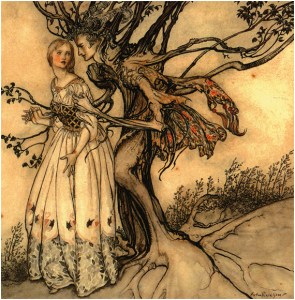
1.  rackham-tree+girlIf you’re interested in books as physical objects as well as vessels for words, The Minster Gate Bookshop is pretty much heaven in rickety, shelf lined form.  It has Bibles bigger than your average 6 year old, first editions, beautiful children’s books and enough literature for the whole family to get lost in for a good hour.  It also has fantastic old maps and prints.  My daughter is collecting Arthur Rackham prints that provide lots of good opportunities to inspire dressing up adventures and stories about the characters and that will one day be an introduction to some classic literature.

2.  This really goes without saying, but York Minster has a wealth of incredible things to look at and discuss – from the stone kings to the stained glass, the crypt and the library, all in addition to the sheer magnificence, beauty and size of the building itself.  400 year old Bibles you have to don gloves to handle?  A great introduction to a discussion about the power of language through the centuries.  The kings tie in nicely with york-minster-1Shakespeare’s Histories (spot the relevant ones) and the crypt’s archaeological and historical lessons could provide a fascinating opening for someone interested in the Anglo Saxons.  There’s been a church on that spot since 627AD after all!

BRIDESHEAD REVISITED, Anthony Andrews, Diana Quick, Jeremy Irons, 1981 Mini-Series

3.  OK, so this one isn’t quite in York, but it’s close enough.  Castle Howard is, in my humble opinion, one of the very best stately homes in the country, if not the best.  It is stunningly beautiful, enormous enough that you can easily spend a whole day exploring, has gardens and horizons you couldn’t ever get bored of and, of course, an absolutely fascinating history.  In fact it seems almost flippant to say that one of my favourite reasons to visit is because I can wander around the grounds pretending to be in Brideshead Revisited, given the history of the Howard family, but I confess my obsession with Evelyn Waugh overwhelms even my love of John Vanbrugh and Georgiana, Duchess of Devonshire.  It is worth many day trips for the cafe and garden centre alone but the best way to see it is from a picnic rug, next to the fountain, with a copy of Brideshead in one hand and a croquet mallet in the other.  All teenagers should read this book.

So there we go.  Fairy tales, Bibles, Anglo Saxons, Shakespeare and Waugh, all barely a stone’s throw from a slice of cake or a brownie in the city centre – and these are just three of the hundreds of places your children could get some ‘English tutoring’ in York this summer.  And if they’d like to come and see me so I can share some of the excitement with them, that’s brilliant too.

How I became an English tutor in York

I’m one of those people who was always going to be a teacher.  Just on my mother’s side of the family alone, my mother works in higher education, my aunt is a primary school teacher and my grandmother taught EAL.  When I did ‘what should I be when I grow up?’ tests, the answer was always teacher.  If you’d asked me when I was 16, I’d have turned my nose up and told you I was going to be a writer, a lawyer or a vet, depending on the week, but in my heart of hearts I think I always knew.

Teaching English is brilliant for two reasons:  I get to talk about books and I get to talk to teenagers who, in almost all cases, are funny, brilliant people.  Put simply, books make me happy and teenagers make me smile.  The combination is exhilarating.

When I moved to York it was for university.  Like lots of York graduates I then decided to stay, because, well, why wouldn’t you?  York and North Yorkshire are beautiful.  I may not officially be a northerner but this is definitely where I belong.  I married my northern boyfriend and we settled in to our respective schools.  (He was a History teacher for a while but now he does things with computers.  Apparently this is also fun, but I suspect not as fun as tutoring English.)  I loved teaching in schools with a passion – I loved boarding, I loved English, I loved Drama, I loved school plays, I loved being a form tutor, I loved UCAS (I know!), I loved my students, I loved my colleagues and I loved, loved, loved talking about books all day.

Bearing in mind how much I loved teaching in schools, it was a slow move to becoming a private tutor.  I took on a couple of students to whom I was recommended by other teachers and gradually I decided that as a tutor I would be able to make more of a difference than I could as a school teacher.  When tutoring English and Drama I and my students can achieve so much more in an hour than we can in a classroom environment.  With no distractions, an hour of tuition can be like a week’s worth of classroom lessons; we can focus entirely and precisely on what that particular student needs and we can make enormous progress extremely quickly.  This is brilliant for students who can suddenly see that they have ability they didn’t realise they had and can get an almost instant confidence boost.  I can plan schemes of work but I’m also not tied to a school’s deadlines so if it becomes apparent that we really need to spend 20 minutes on structuring complex sentences right now, we can do it and the student can get immediate feedback.  I can work really carefully with my students’ needs and, importantly, they can tell me exactly what they want without worrying that they’re taking up too much of my time or that I won’t have the spare hours to dedicate to helping them when they need it.  They get an instant level up – and, in a way, so do I.  I see that glow of confidence, that smile as a particular skill clicks into place, that laugh as a previously impenetrable text suddenly makes sense.

Teaching English and Drama in York was brilliant but tutoring English and Drama in York is even better because the same things are still true – York is beautiful, books make me happy and teenagers make me smile – and now, to top it all off, I get to teach every lesson with a freshly made cup of tea and a slice of Yorkshire parkin.  It doesn’t get better than that.

My life in books

LittleprinceMy favourite book as a child wasThe Little Prince by Antoine de Saint-Exupéry.  When I was little I was fascinated by the pictures (snakes swallowing elephants, monstrous trees, tiny sheep…) but every time I re-read it now I understand something different from it about philosophy and faith.  I have to read it at least once a year and I always give it to babies when they’re born.  It feels appropriate!

Jane EyreMy favourite book as a teenager wasJane Eyre by Charlotte Brontë.  It’s haunting and beautiful and definitely not just a boy meets girl story.  I always wanted a Mr Rochester rather than a Mr Darcy, but when I discovered Jean Rhys’ Wide Sargasso Sea it was a revelation to me that characters – and people in real life – could have multiple lives.  Re-reading Jane Eyre now, I can’t help but be swayed by Rhys’ evocation of Caribbean lushness and a woman so condemned to being ‘other’ that there’s nothing left for her but madness.

P_s_cell_2The best beach read isProspero’s Cell by Laurence Durrell.  Especially if read on a beach in Corfu, followed by a hike to find the cliffs and cell in question!  Durrell argues very convincingly that the island in The Tempest must be either Malta or Corfu, and that Corfu is the more likely.  There’s an amazing little hermit’s cell near Kaminaki, perched on the cliffs above enormous rocks, and all the vegetation around it is knotty pines like the one Arial was trapped in.   You can easily imagine a shipwreck, a monster and a magician appearing before you.   Then, in the evening, after your hike, the best book to wind down with is My Family and Other Animals by Gerald Durrell, Laurence’s brother.  It’s aimed at children but it’s hilarious, and makes it harder to take ‘Larry’ seriously.

why-study-the-bibleThe book I always have by my bed is…The Bible.  I’ve always meant to read it cover to cover, but I tend to get half way through Exodus and give up.  It’s fascinating to me, both as a spiritual and a historical text.

Mr-Pip-3.0-600x311The book that changed my life isMister Pip by Lloyd Jones.  It’s about a girl embroiled in a civil war which threatens to destroy her family and her island.  A man on the island decides that the only way to rescue the children is to educate them, but he only has one copy of one book, which is Great Expectations.  Ultimately, Matilda learns the same lessons as Pip, but in a very modern context.  It’s the only book which has ever made me burst into tears in public, when I was reading it on a train!  I also love it because it’s about teaching, and about how literature can be a salve for all of us when times are tough.  When I’ve had a long day at work it’s a brilliant reminder of what books can do for the human race, and makes me feel lucky to be able to talk about them all day.

_69322860_dictionaryMy favourite non-fiction book is…the Dictionary!

richardii460My favourite play is…Richard II by Shakespeare.  From John of Gaunt’s beautiful speech as a ‘prophet new inspir’d’ about ‘This earth of majesty, this seat of Mars’ that is the England which forms the prize and the battleground of all the History plays, to Richard’s heart-rending goodbye to his Queen before he is murdered, this is a play which looks at the character of the King and of kingship in such detail that the audience can’t help but empathise with him, even as they cheer on Bolingbroke, the future Henry IV.

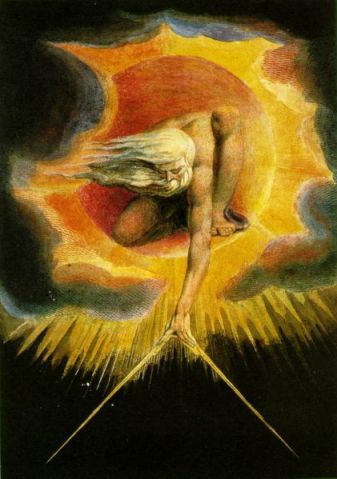
421px-blake_ancient_of_daysMy favourite poet is…John Milton, for everything he ever wrote but especially Paradise Lost.  When I taught Book 9 for the first time I realised how powerful poetry can be.  If it’s possible to sympathise so whole-heartedly with Satan ‘involv’d in rising mist’, what can’t poetry do?

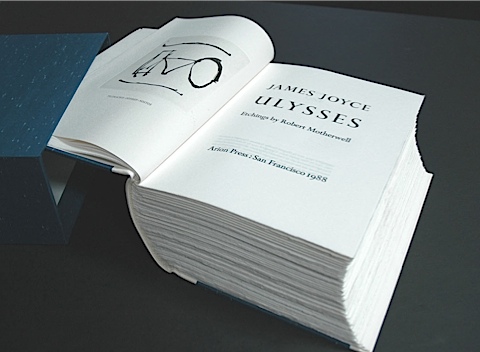
ulysses-james-joyce-1988-robert-motherwellThe book I was supposed to like but didn’t wasUlysses by James Joyce.  I love A Portrait of the Artist as a Young Man and Dubliners but Ulysses was just…boring.
ShakespeareIf I could only read one book for the rest of my life it would be…The Complete Works of Shakespeare.  I know it’s a cheat!

Why I love books – an entirely incomplete list.

  1. They’re a chance to make use of someone else’s imagination for a little while.
  2. They smell nice.
  3. They’re an escape from normality.
  4. Other people write much more beautiful prose than that which I use for thinking.
  5. They’re a useful ‘leave me alone’ sign on public transport.
  6. I can make (semi) informed judgements about other people based on what they’re reading on public transport and then play a game whereby I imagine a name, job and amusing life for them.
  7. They fit in my handbag.  (It’s possible that I only buy handbags big enough to hold a book.  Or two.)
  8. Old favourites never get old.
  9. They’re a good icebreaker when not used as ‘leave me alone’ signs.  It’s all in the tilt.
  10. They’re links through time to other readers.
  11. They contain words and images I’d never have thought of.
  12. Some of them contain poems, some contain plays, some contain fiction and some contain non fiction.  Endless possibilities.
  13. It is pretty much impossible to run out of reading material.
  14. Films are often disappointing when compared to the book but books are never disappointing when compared to the film.
  15. Libraries are places where scrunching down into a sofa and not moving for three hours is positively encouraged.
  16. They make me a better writer.
  17. They make me a better reader.
  18. They educate me.
  19. They inspire me.
  20. As long as I’ve got one, I’m never bored.

acbc5b1a7d9c957e6b0257a4eb2ce56e Oh yes.  Books galore.

‘When it is a question of money, everybody is of the same religion.’

  
So said Voltaire, but while everyone likes to get value for money, our society does not always offer a level playing field in terms of education.  One of the things that I’ve been painfully aware of since I began tutoring is that some of the people that need it, might not be able to afford it.

I firmly believe that an excellent education should be available to all and as such I’m pleased that I’m now able to offer discounted rates to those from low income families.  Please get in touch if you’d like to discuss this.

Half term shenanigans

So the iGCSE is done and dusted, the Shakespeare paper has been tackled this morning and pupils will be breathing a sigh of relief up and down the country… Not quite so for the GCSE lot, who have English Language still to go – cruelly placed as it is, just after half term.

How do you maintain that exam focus over a week of holiday?  Yes, of course, you stick to your revision timetable, and you try to remember to eat well, and, if you’re like me as a teenager, you lock yourself in your room for a few days at a time only to reveal yourself, mad-doctor-haired and more than a little smelly, desperate for a shower on about Wednesday afternoon.

crazy-professor-28436930The most important thing you can possibly do though, no matter where you are in your exams and no matter how many you still have to go, is to give yourself a day off.  A whole day. Preferably (and I know that in terms of your social life this is tantamount to suggesting you run through the school shouting the national anthem while wearing a bear costume) while turning your phone/laptop/brain-chip that connects you to your friends off.

I can hear people scoffing.  But you’ve just spent the last few weeks living, breathing and dreaming exams.  You’ve been in school every day or revising at home, you’ve sat in the same spot in the exam hall staring at the head of the same boy in front of you through hour upon hour of test and you’ve spent your break times and lunch times conferring with your friends about which bits were easy and which bits were hard, probably winding yourself and each other up about all the silly little mistakes you might have made but won’t know about for sure until results day.  You need to just…stop.  Have a day off. Spend it outdoors.  Spend it with your family but tell them they’re not allowed to mention the E or the R words.  (That’s ‘exam’ and ‘revision’ not ‘Emergency Room,’ though probably best to avoid a trip there too.)  Go to the seaside, engage in some mindless window shopping, play with your little brother, walk the dog, read a magazine, watch the news and remember the real world out there, go to the park, go swimming – do whatever it is that you used to do back in the days when you were ‘normal’ and not thinking about Geography Unit 2 when you woke up in a sweaty panic in the middle of the night.

Have a day off.  Your books will be there tomorrow.  And when you’ve had a good, old-fashioned exhausting day of playing out, (which no one is ever too old for, by the way) sleep well, set your alarm for a decent time and get going on that revision.  It’ll be worth it.

Favouritism

047d039e0bdfdda1503c03154f3b8966It’s no secret that teachers don’t have favourite pupils.  It’s unprofessional, cruel to the other children in the class and generally not fair as, of course, all children have the right to be treated equally,  But what I – and I suspect most teachers – do have, are pupils that stick in the memory, even ten or twenty years down the line.

In my first job I had a Theatre Studies class with one particular student who was so incredibly talented that he made me cry during his examined performance.  I taught a boy in an A level English class who used to bring me poems and bits of novels he was working on.  I had a girl in one GCSE class who struggled a great deal but worked so hard that she got an A* through sheer force of will – and she did AS English a year early, at the same time as her GCSEs, and got an A.

All of these pupils from ten years ago, and many from more recent schools that I’ve worked in, stand out for me from the hundreds – thousands? – that I’ve taught.  But what I absolutely love about tutoring is that now, all my pupils are memorable, and for all the right reasons.  Every tutee that I see is here because they want to learn.  They want to improve.  They’ve taken the brave step of acknowledging that they need help with some particular aspect of their learning – even if they’re not completely sure what that is and they need me to help them figure it out – and they’ve arrived, pen in hand, ready to go.  Some of them are very shy, some are confident, some seem confident but are actually incredibly nervous.  I’ve tutored pupils whom schools have refused to teach – who have all turned out, by the way, to be bright, sparky, impressive young people.  I’ve tutored pupils with SEN who are floundering in classes of 30 at school, and who have sat with me, drunk copious amounts of tea, given it their all and done the unthinkable – passed a GCSE that ‘everybody’ said they would fail.  I absolutely love tutoring because every student that comes through my door leaves again more confident and motivated, better equipped to face their difficulties and feeling ready for the next step.  So no, I don’t have favourites.  It wouldn’t be fair.  They’re all brilliant and I remember them all with a fierce pride.

Haikus rise at dawn

Haikus rise at dawnhaiku
through the dreamer’s protesting
yawns and make her sing.

Creative writing has long been part of the GCSE English syllabus in some form or another and some A level options allow students to write creatively too, but lots of adults shelve their creativity and inwardly decide that they weren’t ever very good anyway, so there’s no point in carrying on writing now they’ve got jobs and children and inlaws to contend with.  If you, like me, have exercise books full of slightly angsty teenage poems tucked away in the attic, make some time to dust them off and start writing again – you may be surprised at what’s tucked away between their cardboard covers and within your mind!

What do you gain from writing creatively?

  • Peace and quiet to do it (tell the kids that Mummy’s got to do her homework)
  • An outlet for your feelings
  • An excuse to use beautiful stationery
  • Space to explore your imagination
  • A chance to question yourself about your ideas and emotions
  • A new way to look at yourself

Put simply, creative writing, even the most fantastical of it, in some way reflects life.  Tell a story and you understand a little more of yourself and of the world around you.  It’s worth investing in.

I’ll be running creative writing workshops for adults very soon – get in touch for more details.

When exams go wrong…

exam-stress-cartoon

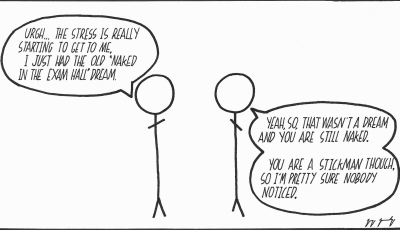
Sometimes, after months of hard work, hundreds of timed essays, a carefully planned revision timetable and more coffee than is good for you, it goes wrong anyway.  The exam board suddenly changes the question style, or you sleep really badly the night before, or you’re ill, or you just panic – and it feels like the end of the world, because you put in all. that. work. for. nothing.  Add in the pressure of having to get up tomorrow and do an entirely different exam, or, worse, college places hanging in the balance or university applications looming, and some students find themselves facing very real – and very upsetting – stress.

So what can you, the student, do about it?  Nothing – and everything.  Nothing, because what’s done is done.  In that sense, you need to do your utmost to put it behind you as soon as possible because you don’t want the upset to affect tomorrow’s exam, or tonight’s revision for that matter.  Shake it off, go for a run, play a computer game, have a long bath – do something that will take your mind off it for the next hour or so.  Then put the offending books out of sight (but don’t bin them!), get the next lot out, and crack on.

(Parents often find that whatever they say in this situation is entirely wrong – however lovely you are about it, a very distressed student may well interpret your concern and care as an indication that either you didn’t think they were clever enough in the first place, or you don’t understand how upset they are, or why.  They’ll realise you don’t mean any of these things eventually, but in the immediate aftermath, it may be best to offer hugs while they’re crying and to just listen to their fears with plenty of tea and cake on hand.)

And then, as I said, you can do everything.  You can use this upset to fuel your determination to get through the rest of your exams.  Once they’re over you can talk to your teachers and make a plan for next year – maybe a resit, maybe not.  Maybe your coursework result will be enough to pull you through.  Maybe your chosen university will accept you even if you drop a grade.  Maybe an AS resit will be far easier by the time you’ve done a whole year of A2 work.  There are lots of maybes out there, and they don’t involve punishing yourself.  If you want to resit, great, do it with bells on!  If you don’t, make a new plan.

Because here’s a secret.  Exams are, really, totally, enormously important.  While you’re doing them.  Next year, this lot won’t matter so much.  And the year after that, they’ll hardly matter at all.  Your SATs are the most important exams you’ll ever do…until your GCSEs.  And your degree is the most important qualification you’ll ever get…until you can write on your CV that you’ve got X years of experience in the job.  There is ALWAYS a way forward.  There is ALWAYS something new around the corner. There is ALWAYS a next stage.  And yes, right now, your exams are important, and it would be foolish to say otherwise. But one day, a few maybes away, noone will give two hoots what you got in your A levels because they’ll be far more interested in you being able to explain an example of how you once overcame adversity, and they might even give you a job if they like your answer.  Or, maybe, you’ll be the one conducting the interview.  Maybe maybe maybe…