‘Tonight’ used to mean ‘last night,’ as in R&J’s ‘I dreamt a dreame tonight.’ You’ve got to love the English language.
from Prep in York – Private English and Drama Tuition http://ift.tt/1R9y88U
via IFTTT
PREP in York | Elizabeth Chadwick Pywell
Expert English, Drama and creative writing tuition
‘Tonight’ used to mean ‘last night,’ as in R&J’s ‘I dreamt a dreame tonight.’ You’ve got to love the English language.
from Prep in York – Private English and Drama Tuition http://ift.tt/1R9y88U
via IFTTT
Here’s a little teaser!
Click here for Prep in York’s December Newsletter
And on that note, have a very Merry Christmas. Family Pywell is off to London tomorrow. Father Christmas knows where to find us, the presents are wrapped and we’ve got our Christmas reading ready to go. Have a wonderful holiday one and all.
I posted this the other day on its own page, but thought it worth reminding people with a blog post too. I’m getting more and more busy with online tuition requests and am delighted at how much it’s taking off! Get in touch if you want to discuss any practicalities.
Online tuition is an increasingly popular way of seeing a tutor; it is convenient for the student, who doesn’t have to leave the comfort of their sitting room or kitchen table, easy to set up with Skype or FaceTime and document sharing through Google Drive or Scribbler and, above all, just as effective and efficient a way of learning as meeting in person. You are still face to face, you still receive instant feedback on your work and you still make excellent, measurable progress.
If online tuition might be fore you, then please get in touch and we can arrange to ‘meet’ at your convenience! I offer a 10 minute introduction to show you how it works first.

This might seem like an odd post for a tutor to write. After all, I’m a tutor, I’m self employed and I rely on my work to keep my children in biscuits and me in books! (As well as all the boring stuff like heat, light and a roof.)
But it’s a question that is worth asking. After all, people have all sorts of reasons for deciding to find a tutor. Here are a few of the reasons I’ve been presented with in the past, and my thoughts on them…
I’m one of those people who was always going to be a teacher. Just on my mother’s side of the family alone, my mother works in higher education, my aunt is a primary school teacher and my grandmother taught EAL. When I did ‘what should I be when I grow up?’ tests, the answer was always teacher. If you’d asked me when I was 16, I’d have turned my nose up and told you I was going to be a writer, a lawyer or a vet, depending on the week, but in my heart of hearts I think I always knew.
Teaching English is brilliant for two reasons: I get to talk about books and I get to talk to teenagers who, in almost all cases, are funny, brilliant people. Put simply, books make me happy and teenagers make me smile. The combination is exhilarating.
When I moved to York it was for university. Like lots of York graduates I then decided to stay, because, well, why wouldn’t you? York and North Yorkshire are beautiful. I may not officially be a northerner but this is definitely where I belong. I married my northern boyfriend and we settled in to our respective schools. (He was a History teacher for a while but now he does things with computers. Apparently this is also fun, but I suspect not as fun as tutoring English.) I loved teaching in schools with a passion – I loved boarding, I loved English, I loved Drama, I loved school plays, I loved being a form tutor, I loved UCAS (I know!), I loved my students, I loved my colleagues and I loved, loved, loved talking about books all day.
Bearing in mind how much I loved teaching in schools, it was a slow move to becoming a private tutor. I took on a couple of students to whom I was recommended by other teachers and gradually I decided that as a tutor I would be able to make more of a difference than I could as a school teacher. When tutoring English and Drama I and my students can achieve so much more in an hour than we can in a classroom environment. With no distractions, an hour of tuition can be like a week’s worth of classroom lessons; we can focus entirely and precisely on what that particular student needs and we can make enormous progress extremely quickly. This is brilliant for students who can suddenly see that they have ability they didn’t realise they had and can get an almost instant confidence boost. I can plan schemes of work but I’m also not tied to a school’s deadlines so if it becomes apparent that we really need to spend 20 minutes on structuring complex sentences right now, we can do it and the student can get immediate feedback. I can work really carefully with my students’ needs and, importantly, they can tell me exactly what they want without worrying that they’re taking up too much of my time or that I won’t have the spare hours to dedicate to helping them when they need it. They get an instant level up – and, in a way, so do I. I see that glow of confidence, that smile as a particular skill clicks into place, that laugh as a previously impenetrable text suddenly makes sense.
Teaching English and Drama in York was brilliant but tutoring English and Drama in York is even better because the same things are still true – York is beautiful, books make me happy and teenagers make me smile – and now, to top it all off, I get to teach every lesson with a freshly made cup of tea and a slice of Yorkshire parkin. It doesn’t get better than that.

So said Voltaire, but while everyone likes to get value for money, our society does not always offer a level playing field in terms of education. One of the things that I’ve been painfully aware of since I began tutoring is that some of the people that need it, might not be able to afford it.
I firmly believe that an excellent education should be available to all and as such I’m pleased that I’m now able to offer discounted rates to those from low income families. Please get in touch if you’d like to discuss this.
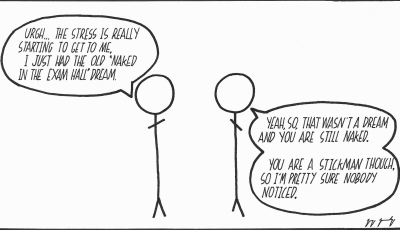
Sometimes, after months of hard work, hundreds of timed essays, a carefully planned revision timetable and more coffee than is good for you, it goes wrong anyway. The exam board suddenly changes the question style, or you sleep really badly the night before, or you’re ill, or you just panic – and it feels like the end of the world, because you put in all. that. work. for. nothing. Add in the pressure of having to get up tomorrow and do an entirely different exam, or, worse, college places hanging in the balance or university applications looming, and some students find themselves facing very real – and very upsetting – stress.
So what can you, the student, do about it? Nothing – and everything. Nothing, because what’s done is done. In that sense, you need to do your utmost to put it behind you as soon as possible because you don’t want the upset to affect tomorrow’s exam, or tonight’s revision for that matter. Shake it off, go for a run, play a computer game, have a long bath – do something that will take your mind off it for the next hour or so. Then put the offending books out of sight (but don’t bin them!), get the next lot out, and crack on.
(Parents often find that whatever they say in this situation is entirely wrong – however lovely you are about it, a very distressed student may well interpret your concern and care as an indication that either you didn’t think they were clever enough in the first place, or you don’t understand how upset they are, or why. They’ll realise you don’t mean any of these things eventually, but in the immediate aftermath, it may be best to offer hugs while they’re crying and to just listen to their fears with plenty of tea and cake on hand.)
And then, as I said, you can do everything. You can use this upset to fuel your determination to get through the rest of your exams. Once they’re over you can talk to your teachers and make a plan for next year – maybe a resit, maybe not. Maybe your coursework result will be enough to pull you through. Maybe your chosen university will accept you even if you drop a grade. Maybe an AS resit will be far easier by the time you’ve done a whole year of A2 work. There are lots of maybes out there, and they don’t involve punishing yourself. If you want to resit, great, do it with bells on! If you don’t, make a new plan.
Because here’s a secret. Exams are, really, totally, enormously important. While you’re doing them. Next year, this lot won’t matter so much. And the year after that, they’ll hardly matter at all. Your SATs are the most important exams you’ll ever do…until your GCSEs. And your degree is the most important qualification you’ll ever get…until you can write on your CV that you’ve got X years of experience in the job. There is ALWAYS a way forward. There is ALWAYS something new around the corner. There is ALWAYS a next stage. And yes, right now, your exams are important, and it would be foolish to say otherwise. But one day, a few maybes away, noone will give two hoots what you got in your A levels because they’ll be far more interested in you being able to explain an example of how you once overcame adversity, and they might even give you a job if they like your answer. Or, maybe, you’ll be the one conducting the interview. Maybe maybe maybe…
So, how do you approach that enormous pile of files and books? Put them under your pillow and hope the information magically gets into your brain while you dream? It’s one approach, but I can’t guarantee it’ll work… What I can guarantee though, is that starting is the hardest and most important bit. Here are some ideas on how to get going.
Next, decide your approach for each subject. Get organised – you need a file where you can find things quickly and easily. In English you might need time to do any or all of the following:
How do you learn quotations? Some people find this really easy and others find it awful. If you’re in the latter camp, try and integrate it into your everyday life. For each theme or character you need a sheet of plain A4. Write the name of the character or theme in the middle and circle it, then go through the text and pick out the main, appropriate quotations. Write them around the page in different colours so they stand out. Once you’ve done this for the whole text, wallpaper your bedroom. That way when you’re losing focus during your revision and you glance up to stare into space, you’ll find yourself staring at King Lear instead… Another good place to put them is in the bathroom. Nothing like staring at the loo door to help you learn quotations about philosophy and the meaning of life!
So how do you start revising? Make a plan and then…just start!
“But how do I revise?” is a question I hear several times a year. There’s no easy answer unfortunately – you are an individual with individual needs! A good place to start is to decide what kind of learner you are. Think about your lessons at school, for instance. Do you learn best by listening to the teacher and then writing down notes? Or would you forget everything she was saying before it got to paper? Perhaps you need to keep moving while you learn – do you pace your room while reciting verbs? Or maybe you need to see the idea in written or figurative form, and then write copious notes of your own? Basically, do you learn best by listening, moving or seeing? Once you have answered this question, you can use your own personal learning style to help you during your revision.
Auditory learner tips (LISTEN):
Kinaesthetic learner tips (MOVE):
Visual learner tips (SEE):
Next time: How to begin your revision
PREP: to prepare/to make ready/to get in gear.
Don’t do it alone. Get PREPPED.
Have a browse and get in touch.

 PREP in York | Elizabeth Chadwick Pywell